
Part Of A: Solution A Counterculture Whodunit.
Elana Michelson

A 2025 INDIES Award Finalist • BookLife Editor’s Pick • Foreword Clarion Reviews 5 Stars
It’s 1978. A murder has shattered the fragile peace of a countercultural community.
Jennifer Morgan is a sassy New Yorker hiding from graduate school in Flanders, Massachusetts, a countercultural haven of activists, seekers, poets, and idealists. At the Café Galadriel, Dylan plays on the record player while politics jockey for table space with Tarot readings. Then one of its customers turns up dead.
Everyone is a suspect: the Yeats-wannabe poet, the anti-war hero, the organic farmer who knows how to hold a grudge. Jennifer begins asking questions, forming an uneasy alliance with Ford McDermott, a young police officer whose ideas about justice are very different from hers.
Literate, atmospheric, and witty, Part of the Solution is a both rueful love letter to a vanished moment and a meditation on loyalty and justice.
A unique blend of village whodunit and 1970s historical fiction, Part of the Solution is for those who like character-driven mysteries peppered with snappy dialogue, unconventional settings, and the whiff of rebellion in the air.
CLICK ANY OF THESE TO BUY PART OF THE SOLUTION NOW:
OR ELSE BORROW PART OF THE SOLUTION FROM YOUR LOCAL LIBRARY

Listen To Part Of The Solution’s Iconic Soundtrack While You Talk About The Book:
Book Club Discussion Questions
1. What was your experience of reading Part of the Solution? Were you immediately drawn into the story? Did the book intrigue you? Amuse you?
2. In various ways, many of the characters in Part of the Solution claim to be working for social justice. How did you understand the theme of social justice in the novel? Which of the characters embodied the political convictions of the 1960s and 1970s in ways that you found meaningful?
3. While all of the residents of Flanders are “countercultural,” they are very different from each other. What different aspects of the counterculture are represented by various characters? Who was your favorite character, and why?
4. There is always music playing at the Café Galadriel. What is the role of music in the novel?
5. What attracts Jennifer and Ford to each other? What tears them apart at the end? Do you think that they could have stayed together if circumstances had been different? Do you think that Ford was right in the decision he made?
6. A death goes unresolved for decades. Why do you think Jennifer kept what she knew to herself? Would you have made the same choice?
7. In the epilogue, Jennifer reflects that, over the course of her life, she has “learned what everything cost.” What has she learned? How did her time in Flanders impact the rest of her life?
8. If you lived through the 1970s, how did the novel’s portrait of the era match or differ from your own memory of it? If you didn’t, what resonated with you or surprised you about this period as depicted here?
9. Did you guess the solution to the mystery or were you surprised? Did you find the ending satisfying? If you could rewrite the ending, would you? If so, what ending would you have rather seen?
10. If you were to talk with author Elana Michelson, what would you want to tell her? What would you like to ask her? (Note: you can be in touch with Elana through her website: elanamichelsonauthor.com. She loves talking with book clubs. She says that she always learns something new about the book.)
AN INTERVIEW WITH
ELANA MICHELSON

About Elana
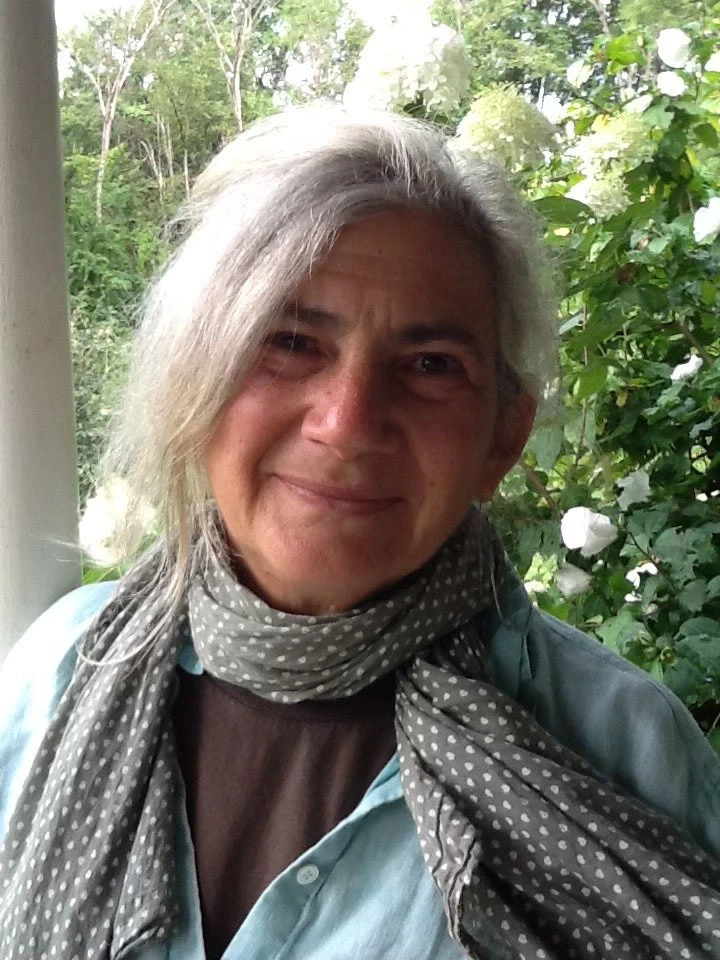
Elana Michelson is a native New Yorker now living in the Hudson Valley, where she writes, reads, gardens, and volunteers with local social justice organizations. After thirty-five years as a professor, she has put down a beloved career of academic writing (and student papers) in favor of writing murder mysteries. She earned a PhD in English from Columbia University, but she gained her knowledge of the life and times of Part of the Solution by … well, having been there.
Please be in touch with me. I love hearing from readers and talking about books. I especially love connecting with book clubs – I learn something new about Part of the Solution every time I do. We can connect on Zoom or, if you are in New York, New Jersey, or New England, perhaps even in person.
You can reach me through my website, Facebook, or by email at elana@elanamichelsonauthor.com.